

Media access to your divorce hearing, what you need to know
Journalists could attend your divorce hearing after a new law came into play across England and Wales.
Aimed at increasing transparency of the family court system and public confidence in legal decisions, the move follows a three-year trial.
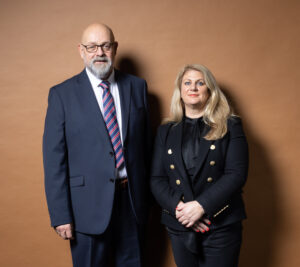
We speak to Vincents Solicitors’ divorce specialists Mark Mosley and Mary Lowe about what the changes could mean for you.
Until now, hearings to decide how a divorcing couple split their money and childcare requirements were private and confidential.
A limited pilot scheme launched in 2021 saw ‘accredited’ journalists able to apply to attend these Financial Remedy hearings and view certain documents.
This has now been expanded but access must be applied for in advance, so couples would know if a journalist would be present before they arrived at court.
There are strict rules about what they can and cannot publish, as the judiciary seeks to maintain confidentiality for families and – crucially – children.
Reporters can’t list the names, address, employers, schools of anyone involved.
In short, no identifying information.
This begs the question, why would a journalist want to attend a divorce hearing, especially if they can not name the parties?
Mark Mosley, head of family law at Vincents Solicitors in Preston, said: “The vast majority of divorce cases are not of any interest to the press, and there is no public interest served by reporting on them.
“Most of my clients are unlikely to find a journalist sitting in their hearing, reporting on their financial settlements.
“But, although there are restrictions, a lot of personal information can be published about wealth, income and lifestyle.
“So, for those with fame or wealth, there is a greater chance of reporters being interested in their proceedings.
Mr Mosley believes the real aim of the scheme is to strongly encourage couples to use alternative methods of resolution – outside the court room – freeing up court time and judges to help deal with the vast backlog of criminal cases.
He said: “I think the MoJ’s intent is clear, they want to see divorce taken out of the courts and dealt with by other means.
“We expect people will prefer to settle their financial dispute outside of the court, rather than risk their private affairs being reported on.”
The alternative already exists, and it is expected that more couples will now opt for a Non-Court Dispute Resolution (NCDR) to avoid court.
This judge-led or barrister-led mediation, where parties openly negotiate and seek a solution, is non-binding unless both consent to a final financial order.
The adjudicator will indicate what they think should happen, and the overwhelming majority of cases settle at this stage.
Mary Lowe, Vincents Director and head of boutique divorce practice Mary E Lowe, already offers NCDR to her high net worth divorce clients.
She said: “We knew this was coming and many of our clients have been using NCDR for some time now.
“A change last April saw those who failed to agree to NCDR threatened with huge legal costs, so it’s clear this is the direction the MoJ wants divorce to go,” she added.
NCDR can be a more positive experience than a court hearing, providing clients with another reason to choose the option.
It is not limited to court times, so can start earlier and finish later to ensure matters are completed in one day. It can be held in a more informal, pleasant environment, at a location convenient for the couple, such as at their solicitor’s office or barrister’s chambers.
Mary said: “NCDR does have its benefits for clients, many of whom are already traumatised by the breakdown of the marriage and deserve some compassion.
“Taking proceedings out of the court, which can be intimidating and nerve-wracking, can provide a better experience.
“NCDR allows us to offer more flexibility in time and location, and there is a focus on negotiation over confrontation which is better in the long term.”
As a specialist divorce lawyer who acts for high net worth individuals from the business, sporting and entertainment worlds, Mary knows her clients’ cases will be of interest to the media.
“The Position Statement is the opportunity for the parties to set out everything about themselves, their lives, their finances, and the their future needs”.
“This is very personal and can be deeply traumatic, it’s hard enough to lay it out in front of a judge in a court of law, never mind the general public.
“For that information to end up in the papers, at a time when clients and their children are so vulnerable, it could ruin careers and destroy families.
“While there may be some who relish the performance a courtroom can offer, I expect most will opt for the NCDR route and this will, hopefully, provide a more positive outcome overall for those families.”
For support with your divorce contact Mary Lowe at Mary E Lowe in Lytham on 01253 773377 or Mark Mosley at Vincents Solicitors in Preston on 01772 555 176..
What can a journalist now do and report
An accredited journalist can apply to a judge for a Transparency Order.
This gives them access to the hearing and permission to view certain documents in particular your position statement and the court template document ES1.
Your position statement is generally a summary of the financial assets and your position regarding the division of them.
This can include a lot of personal information such as any claims of infidelity or descriptions of behaviour which one side helps will help their case.
Reporters must ensure anonymity and are restricted about what facts they can use. They must not publish:
- The names and addresses of the parties (including any interveners) and their children and any photographs of them;
- The identity of any school attended by a child of the family;
- The identity of the employers, the name of the business or the place of work of any of the parties;
- The address of any real property owned by the parties;
- The identity of any account or investment held by the parties;
- The identity of any private company or partnership in which any party has an interest;
- The name and address of any witness or of any other person referred to in the hearing save for an expert witness.
Further details are available from HM Courts & Tribunals Service